


HOW THE MOVE FROM PCOS TO PMOS COULD HELP 170 MILLION WOMEN
Originally named in the 1930’s, descriptions of the condition previously known as polycystic ovarian syndrome (PCOS) can be found as early as 460 BC during the Hippocratic era1. Recently, the scientific community rallied for a name change from PCOS to PMOS (polyendocrine metabolic ovarian syndrome) in an attempt to more accurately describe the condition.
This is not the first rename for PMOS, prior to PCOS, it has also been known as Stein-Leventhal syndrome and “acute ovaritis of the first degree.”2 But what is the point of a name change? Well, the name PCOS not only obscures the condition’s endocrine and metabolic features, but also confuses medical professionals and patients alike, delaying diagnosis and hampering
effective clinical solutions.3
Indeed, research suggests that up to 70% of affected individuals are as yet undiagnosed, in part due to the confusion created by the conditions misnomer.3 Considering that PMOS is suspected to affect 170 million people worldwide, that is a lot of patients without adequate care.

How the words we use shape science, medicine and the patient experience
The language used has massive consequences. From a scientific perspective, this is evident in literature searches or systematic reviews – for example, comparing results obtained using the term “ovary” alone versus a broader search including “ovary, metabolic, and endocrine” will yield vastly divergent data. Expanding the language, to PMOS, also brings in a wider range of medical disciplines beyond fertility specialists. When the condition is framed narrowly around the ovaries, it limits integration with research on related endocrine and metabolic disorders. As a result, opportunities to draw insights from adjacent fields are often missed.
The PCOS misnomer impacts medical diagnosis
There has been a degree of confusion and ongoing debate about how this condition is diagnosed. The name PCOS suggests that polycystic ovaries are central to the condition. However, only about 10% of those studied actually present with ‘polycystic ovaries’ (see
Figure 1).4 In one study nearly half of the participants saw more than 3 medical professionals before a diagnosis was established and for a third of these, the process took > 2 years.4 Other sources cite that it can take up to 12 years to be diagnosed, and other note that medical professionals did not see the value in diagnosis unless the patient wanted to fall pregnant (as if a woman’s only measure of reproductive health is her ability to produce children).5,6
Professor Teede, who was among the leading researchers driving the name change claims that focus primarily on the ovary has led to ‘delayed diagnosis, limited awareness and inadequate care’.5
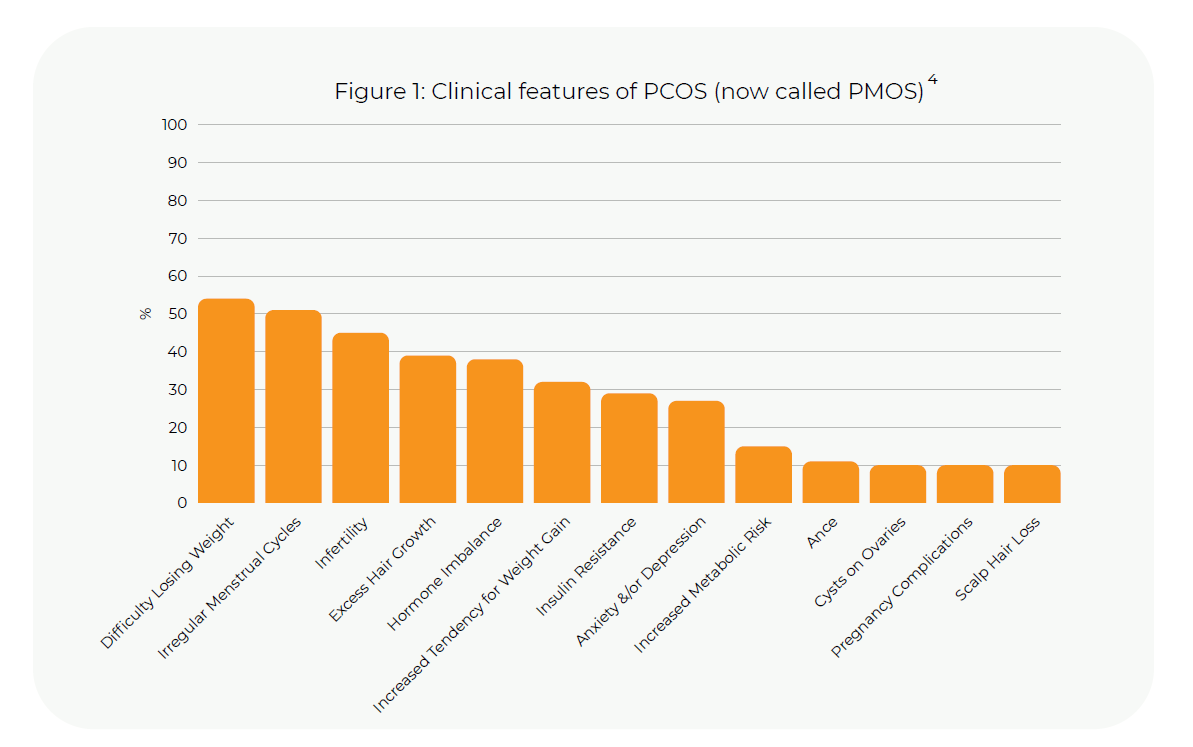
Figure 1: Clinical features of PCOS (now called PMOS)4
Intervention focused on the ovary misses systemic dysfunction
The primary function of the ovary is to produce an egg – which will either result in a pregnancy or a menstrual period. With the focus of PMOS historically being primarily on the ovary, treatment was subsequently focused on achieving a pregnancy or establishing a
menstrual cycle. This meant ovarian stimulation or other assisted reproductive technology in the pursuit of a pregnancy or use of the oral contraceptive pill (OCP) to achieve a menstrual period, not only missing the extra ovarian symptoms of the condition, but also failing to reestablish hormonal health (as the OCP creates a breakthrough bleed which is physiologically distinct from a true menstrual cycle). With the focus now bleeding (excuse the pun) outside of the ovarian
lens, so too will the treatments used to manage this condition.
How a new name impacts the individual
Well, for a start, it’s as though the condition has been renovated and rebranded. This means increased attention and hopefully, increased medical awareness of the complexity of the condition. It also shifts the focus away from just ‘fixing’ the ovary and means that patients can more easily advocate for achieving metabolic and endocrine health in the absence of wanting to fall pregnant. Ideally, the name change will also bring with it an understanding of the diet and
lifestyle interventions that will impact the metabolic, endocrine and hormonal aspects of PMOS.
Ultimately, when it comes to health, and in particular female health, any attention is good attention. A new name brings with it a new lens from which to view the condition, better understanding within the medical community and the general public, and an
opportunity for better utilisation of the medical research.
To gain a deeper insight into the metabolic drivers of PMOS (and other conditions of stubborn weight loss), view the replay of our recent seminar, The New Weight Loss Era: Empowering the Natural Medicine Practitioner in the Age of GLP-1.
References:
- Meczekalski B. Polycystic Ovary Syndrome: Past,
Present and Future. J Clin Med. 2023 Jun 1;12(11):3808.
doi:10.3390/jcm12113808 PubMed PMID: 37298003;
PubMed Central PMCID: PMC10254039. - Adashi EY, Cibula D, Peterson M, Azziz R. The
polycystic ovary syndrome: the first 150 years of study.
FS Rep. 2023 Mar 1;4(1):2–18. doi:10.1016/j.xfre.2022.12.002 - Teede HJ, Khomami MB, Morman R, Laven JSE,
Joham AE, Costello MF, et al. Polyendocrine metabolic
ovarian syndrome, the new name for polycystic ovary
syndrome: a multistep global consensus process. The
Lancet. 2026 May;S0140673626007178.
doi:10.1016/S0140-6736(26)00717-8 - Gibson-Helm M, Teede H, Dunaif A, Dokras A.
Delayed Diagnosis and a Lack of Information
Associated With Dissatisfaction in Women With
Polycystic Ovary Syndrome. J Clin Endocrinol Metab.
2016 Dec 1;102(2):604–12. doi:10.1210/jc.2016-2963
PubMed PMID: 27906550; PubMed Central PMCID:
PMC6283441. - NewsGP [Internet]. [cited 2026 May 15]. newsGP –
PCOS officially renamed polyendocrine metabolic
ovarian syndrome. Available from:
https://www1.racgp.org.au/newsgp/clinical/pcosofficially-
renamed-polyendocrine-metabolic-ov - May N, Lu D, Davis N. ‘Unprecedented’ global effort
gives new name to polycystic ovary syndrome – and
new hope to millions of women. The Guardian
[Internet]. 2026 May 12 [cited 2026 May 15]. Available
from: https://www.theguardian.com/society/nginteractive/
2026/may/12/polycystic-ovary-syndromepcos-
new-name-polyendocrine-metabolic-ovariansyndrome-
pmos

